Fiber Cement Siding Materials: A Northern Michigan Guide
Learn how fiber cement siding materials hold up to Michigan weather, what they cost vs vinyl and brick, and how to pick the right profile and installer.
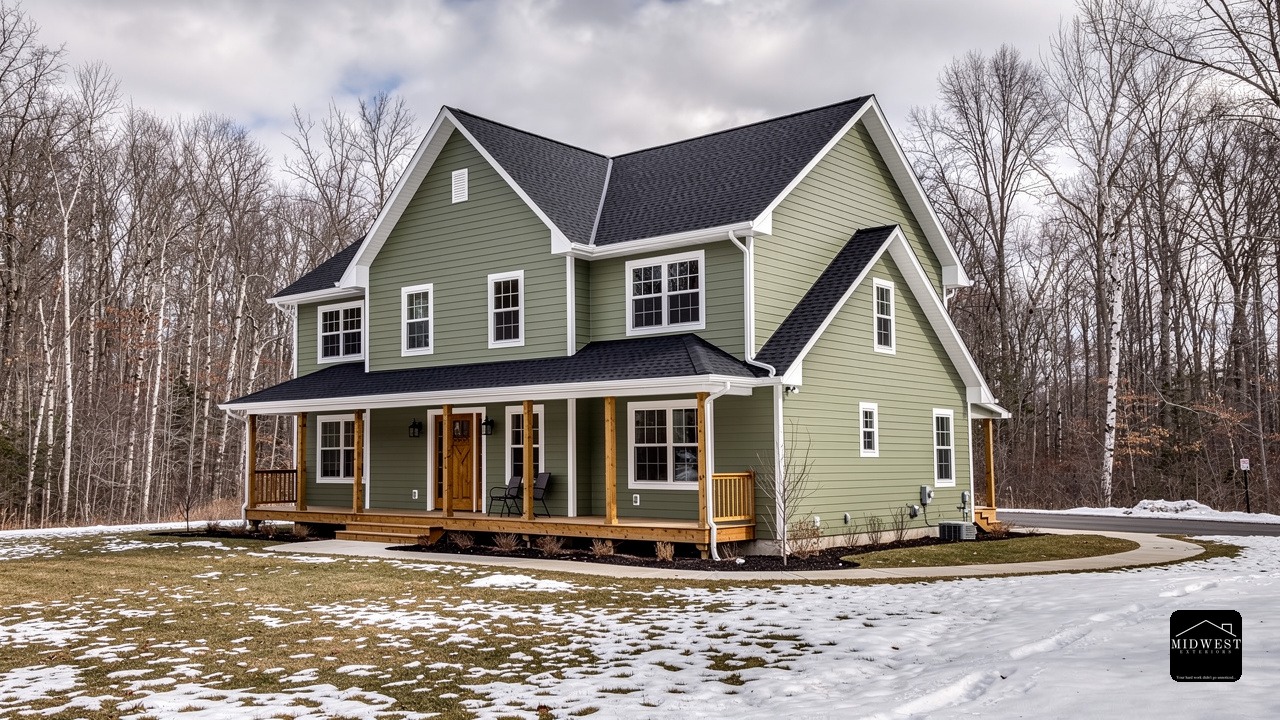
Choosing between wood, vinyl, and fiber cement siding materials gets confusing fast once your old siding starts cracking, fading, or letting water in. Northern Michigan homeowners feel this pressure every spring, when thawing snow and freeze cycles expose weak spots that paint alone can't fix anymore. Fiber cement siding materials are a cement-based composite made from Portland cement, sand, water, and cellulose fibers, built to resist moisture, pests, and fire while needing very little upkeep compared to wood. In this article, I'll walk through what the material is made of, how it stands up to Michigan weather, what it costs next to vinyl and brick, which profiles suit local home styles, and how to choose a contractor who installs it correctly. I work alongside Midwest Exteriors, a Williamsburg-based exterior company serving Traverse City and Northern Michigan, so I'll bring in some practical, local context as we go. Keep reading to see whether this siding fits your home and your budget.
Key Takeaways
- Fiber cement is made from cement, sand, water, and cellulose fibers, which gives it fire, moisture, and pest resistance that wood simply can't offer on its own.
- It costs more than vinyl but less than brick or stucco, with final pricing depending heavily on profile, square footage, and your local dealer.
- It needs very little maintenance over the years, especially when you choose a prefinished color instead of a site-painted option.
- It comes in several profiles, including lap, shake, and board and batten, so it can match most home styles found across Northern Michigan.
- Professional, climate-aware installation matters just as much as which product you pick, since poor installation causes most of the problems blamed on the material.
What Is Fiber Cement Siding Made Of?
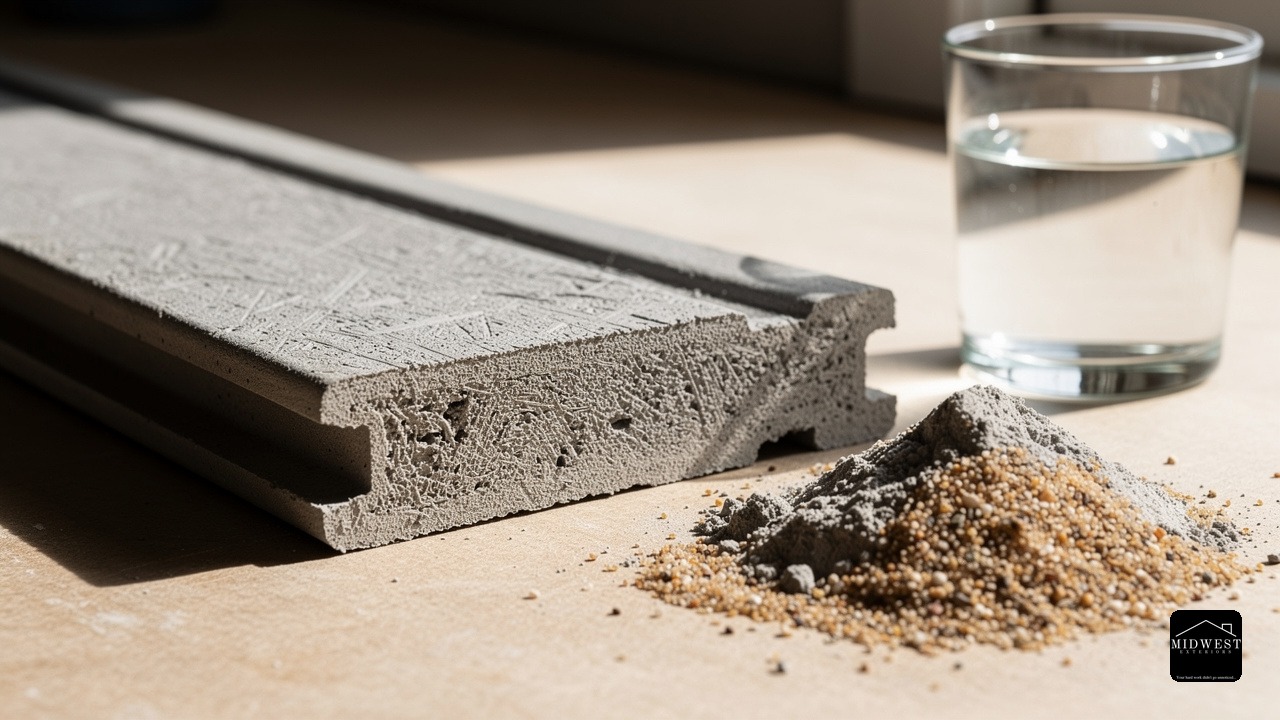
Fiber cement siding materials are built from a simple blend of Portland cement, sand, water, and cellulose fibers pressed into semi-rigid boards, panels, or shingles. Each manufacturer tweaks this base recipe with its own proprietary additives, which is why one brand's performance can differ from another's even though the core ingredients look similar on paper. James Hardie, one of the most recognized names in the category, adds its own formula to improve strength and surface finish.
This mineral-based makeup is what sets fiber cement apart from wood and vinyl siding. Wood is organic, so it absorbs moisture, swells, and eventually rots or attracts pests. Vinyl is a plastic product that can soften in heat or turn brittle in deep cold. Fiber cement holds its shape through temperature swings far better than either one, which matters a lot once winter sets in up here.
How Does Fiber Cement Perform Against Michigan Weather?
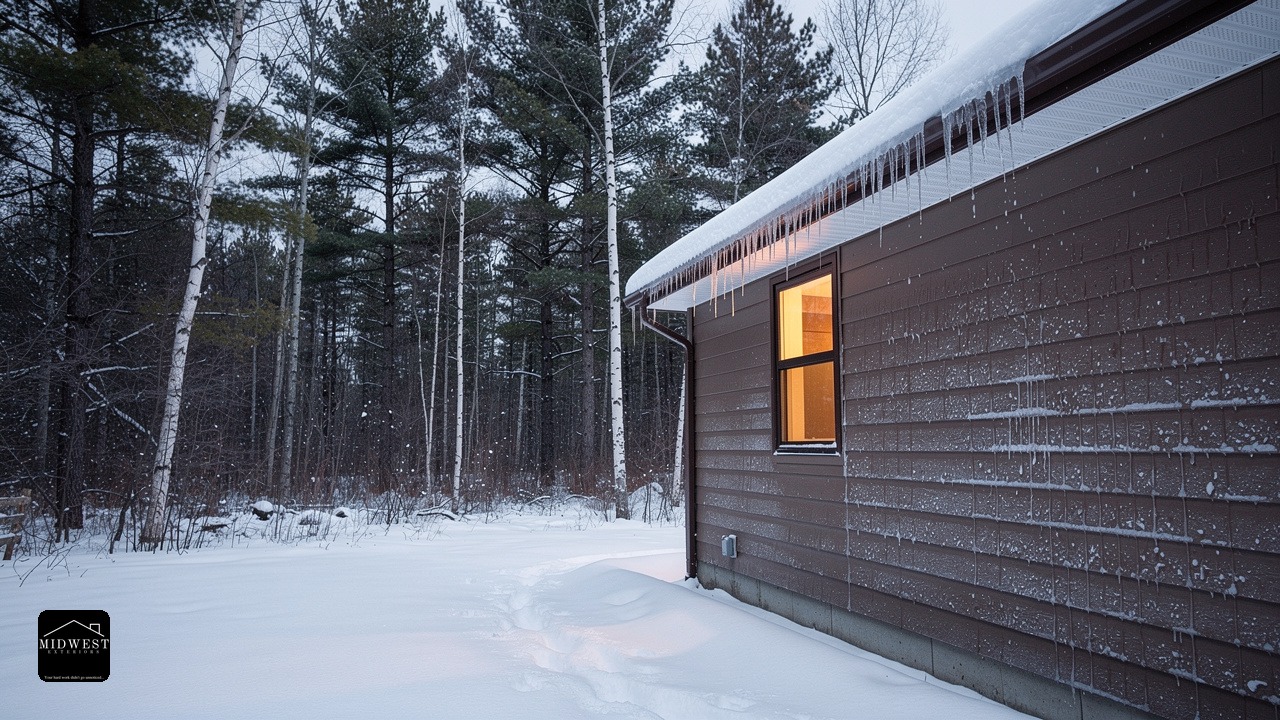
Fiber cement siding materials perform well in Northern Michigan because their cement base resists the moisture, rot, and freeze-thaw stress that wears down wood siding over a few short winters. Our region puts exterior materials through a rough cycle of snow, melt, and refreeze almost every week between November and March, and that moisture exposure is exactly what wood siding struggles against over time. Fiber cement doesn't contain the organic material that attracts rot, and it holds up to repeated wetting and drying without swelling or splitting the way wood planks can. It's also unappealing to woodpeckers, termites, and carpenter ants, which is a real concern for homes backing up to wooded lots common around Traverse City, Elk Rapids, and Interlochen. On the fire side, most fiber cement products are noncombustible or carry a Class A fire rating under ASTM E84 testing, and studies on carbonation and fiber hornification in fiber-cements show how these materials maintain performance under long-term environmental stress, meaning they won't ignite from a direct flame or add fuel to a fire. That said, this fire resistance applies to the cement board itself, not necessarily to any paint or coating applied on top, which can still scorch or blister under direct heat. For homeowners weighing durability against upfront cost, this combination of moisture resistance, pest resistance, and fire performance is usually the deciding factor over vinyl.
Why Seal and Climate Engineering Matter More Than Style
Picking a siding color or texture is the fun part, but climate engineering is what actually determines how your home holds up through a Northern Michigan winter. Freeze-thaw cycles put real stress on seams, fasteners, and the substrate underneath any siding product, so a board engineered for southern humidity won't necessarily perform the same way here.
This is similar to how Midwest Exteriors approaches window selection, choosing products based on seal performance for our climate rather than picking styles first and hoping the seal holds up. The same logic applies to siding. A fiber cement product engineered with regional weather in mind, paired with correct flashing and fastening during installation, is far more likely to perform well through year ten than one chosen on looks alone, a point reinforced by research on insulated cladding energy performance in U.S. residential buildings.
What Does Fiber Cement Siding Cost Compared to Other Materials?
Fiber cement siding materials typically cost less than brick, synthetic stucco, and some wood siding options, while running higher than vinyl siding at the initial purchase stage. Retail pricing offers a rough starting point, with individual products commonly ranging from about $10 to $200 depending on the profile, size, and brand, though that figure doesn't include labor, trim, or removal of your old siding. Where fiber cement actually lands on your home depends on the square footage being covered, the complexity of your roofline and trim, the condition of the sheathing underneath, and local labor rates here in Northern Michigan. Here's roughly how the main siding materials stack up against each other on cost alone.
| Material | Typical Cost Position |
|---|---|
| Vinyl | Lowest upfront cost |
| Fiber Cement | Moderate, above vinyl |
| Hardboard or Composite | Similar to fiber cement |
| Wood | Varies, often higher with upkeep |
| Brick or Stucco | Highest upfront cost |
Why Pricing Varies by Home and Dealer
Every home's shape, trim needs, and substrate condition change the final siding number, which is why two neighbors can get very different quotes for similar square footage. Midwest Exteriors doesn't publish prices online for this exact reason. A free in-home estimate measures your actual openings and walls, producing a written, itemized figure instead of a vague guess.
Which Fiber Cement Styles and Profiles Fit Northern Michigan Homes?
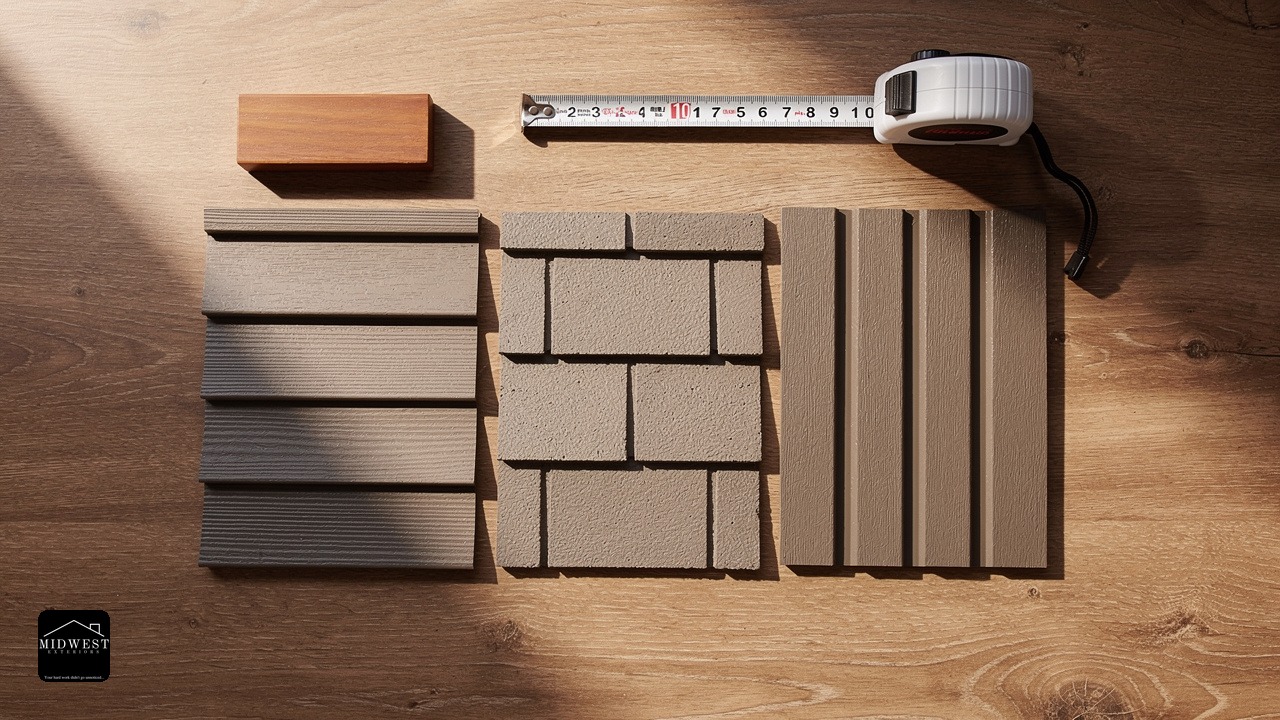
Fiber cement siding materials come in several profiles and textures, so most homeowners can find an option that matches their existing architecture rather than forcing a compromise. Horizontal lap siding gives a traditional, craftsman-style look and remains the most common choice on homes across the region, largely because it's budget-friendly and widely available. Vertical panel siding creates clean, modern lines that suit newer builds or additions, while shake-style fiber cement mimics cedar shake without the rot risk, making it a popular accent for gables. Board and batten, with its alternating wide boards and narrow strips, started on barns and sheds but now shows up on a lot of modern Northern Michigan homes because it can make a smaller house look bigger and brighter. Mixing profiles is common on local properties too, with lap siding covering the main walls and shake or board and batten used as an accent on gables or dormers for visual contrast.
Low-Maintenance Alternatives Worth Comparing
If you're weighing fiber cement mainly for its low upkeep, it's worth knowing what else is on the market before you commit. The company offers three three siding profiles of its own, horizontal lap, board and batten, and shake, giving homeowners a similar range of looks to choose from locally.
It also carries Alside ASCEND, a composite cladding designed to resemble real wood while cutting down significantly on the repainting and scraping that wood demands. It's a useful comparison point if you like fiber cement's durability but want to weigh it against another low-maintenance option before deciding.
How Do I Choose and Install Fiber Cement Siding the Right Way?
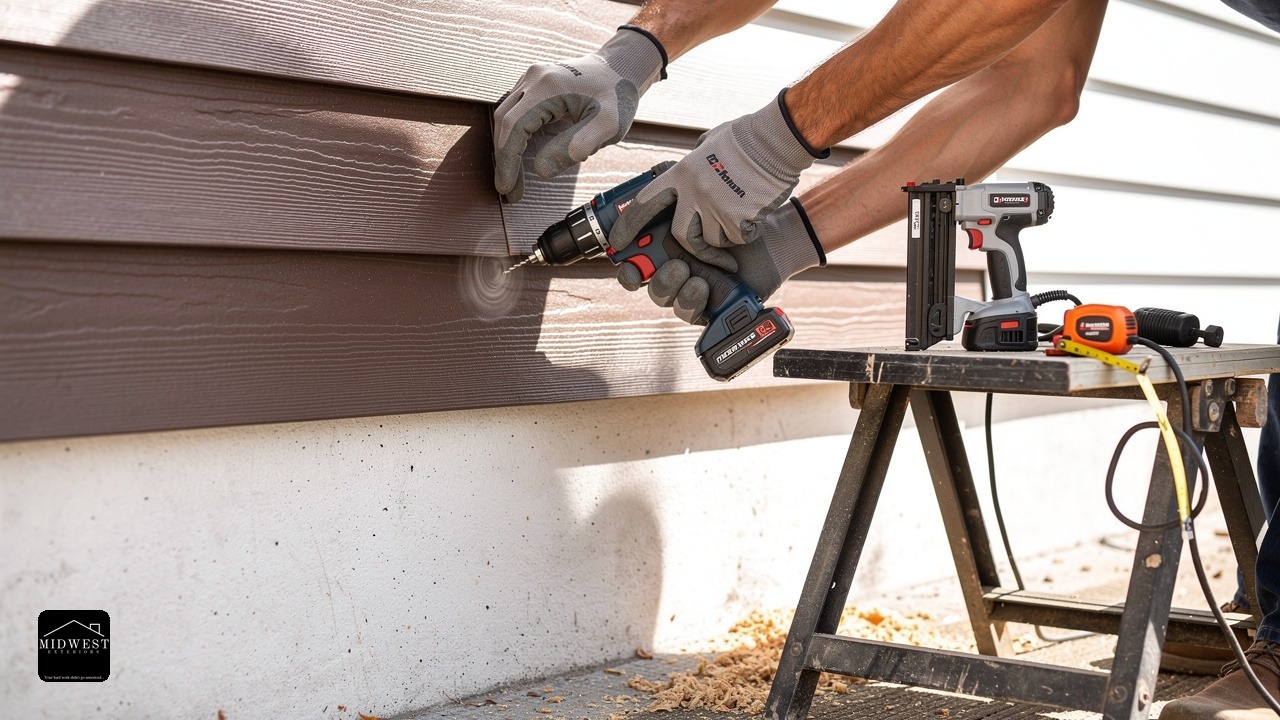
Fiber cement siding materials are heavy, dense, and cut with specialized blades, so professional installation protects both the finished look and your manufacturer warranty. Skipping proper fastener spacing, flashing, or clearances can void that warranty even if the product itself performed exactly as designed. Before hiring anyone, request physical samples so you can see the color and texture in your own yard's lighting, since swatches online rarely match reality. From there, compare at least a couple of written quotes, and confirm the contractor has installed the specific product line you're considering, not just fiber cement in general.
- Request samples first so you can judge texture, color, and profile against your home's trim and roofline before ordering anything.
- Ask each contractor whether their quote includes removal of old siding, substrate repair, moisture barrier installation, and cleanup, since these line items vary widely between bids.
- Confirm the installer is familiar with the manufacturer's fastening and flashing specifications, since incorrect installation is the most common cause of early failures, and manufacturer fiber cement installation guidelines spell out exact fastener spacing and clearance requirements for this reason.
Why Local, Own-Crew Installation Reduces Risk
Midwest Exteriors uses its own employed crews rather than subcontractors, so the estimator who measures your home briefs the installation team directly before anyone shows up. Customers also get a confirmed install date before the order goes to the manufacturer, which cuts down on the scheduling surprises that often come with larger siding projects.
The Takeaway
Fiber cement siding materials give Northern Michigan homeowners a solid middle ground between vinyl's low cost and wood's natural look, without the rot, pest, or repainting headaches that come with traditional wood siding. It costs more upfront than vinyl, but the combination of fire resistance, moisture resistance, and low maintenance tends to pay off for homeowners planning to stay in their home for years rather than selling soon.
If you're weighing this material for an upcoming project, the next practical step is a free, in-home estimate rather than guessing from online pricing charts. Midwest Exteriors can walk your property, measure accurately, and hand you a written, itemized number along with a real installation date, so you know exactly what to expect before any order gets placed.
Frequently Asked Questions
These are the questions I hear most often from Northern Michigan homeowners comparing fiber cement siding materials against other options before starting a project.
Is Fiber Cement Siding Worth the Extra Cost Over Vinyl?
For most homeowners planning to stay put for several years, yes, since fiber cement's fire, pest, and moisture resistance cut down on repairs and repainting that vinyl doesn't require but wood often does. If you plan to sell soon, vinyl's lower upfront cost may make more sense.
How Long Does Fiber Cement Siding Last?
Fiber cement has a reputation for a long service life thanks to its cement-based composition, often outlasting vinyl and many wood siding products. Actual lifespan depends heavily on installation quality, climate exposure, and how well the surface finish is maintained over time.
Can Fiber Cement Siding Crack in Freezing Temperatures?
Properly installed, climate-engineered fiber cement is designed to handle freeze-thaw cycles without cracking under normal conditions. When cracking does happen, it's usually caused by poor installation or trapped moisture behind the boards, not a flaw in the material itself.
Does Fiber Cement Siding Need to Be Repainted?
Prefinished products with factory color coatings resist fading and chipping, so they need repainting far less often than site-painted fiber cement. For regular upkeep, manufacturers generally recommend cleaning with just a soft brush and a garden hose.
How Long Does a Fiber Cement Siding Installation Take?
Timelines vary quite a bit based on home size, the number of profiles used, and whether old siding needs removal first. Your contractor should scope an accurate timeline during the in-home estimate rather than quoting one over the phone.
Can I Install Fiber Cement Siding Over My Existing Siding?
This depends entirely on the condition of your current substrate, since rot or damage underneath needs repair before any new siding goes on. A contractor should check this in person during your estimate rather than assuming it's fine from photos alone.