What Does ENERGY STAR Mean for Your Michigan Home?
Curious what ENERGY STAR really certifies? Learn how the label works and what it means for windows, siding, and doors in Northern Michigan homes.
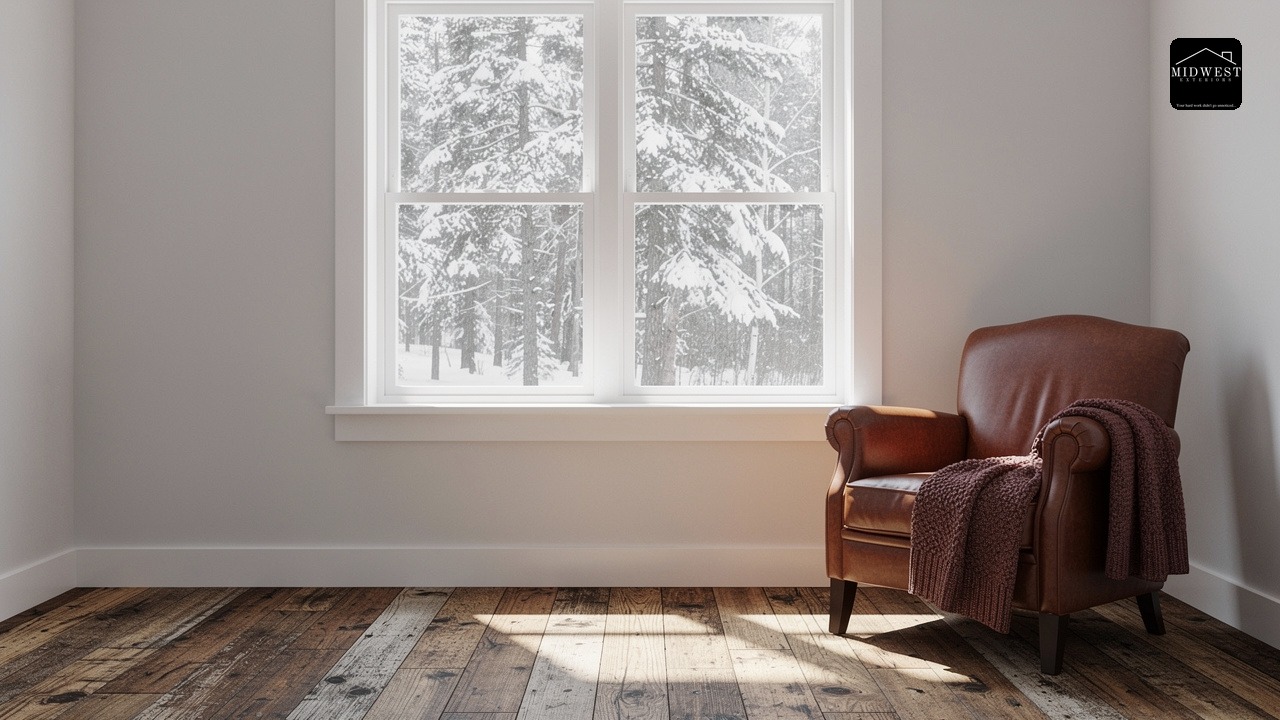
If you're planning to replace windows, siding, or an entry door somewhere between Traverse City and the rest of Northern Michigan, you've probably seen the ENERGY STAR label on a spec sheet and wondered what it actually guarantees. Marketing uses the term so often that it can feel like background noise rather than something that changes your monthly utility bill or your comfort on a cold January morning.
ENERGY STAR is a federal energy-efficiency program the Environmental Protection Agency launched in 1992, and it marks products and homes that meet set efficiency standards built to cut energy use and lower costs. In this article, I'll explain what the program does, how a product earns the label, what that means for the windows, siding, and doors on your own house, and why that matters once a Michigan winter sets in. I'm writing this as part of Midwest Exteriors, where our crews install these exact products across the region, so I'll tie the national standard back to decisions you're weighing right now.
Key Takeaways
Here's a quick summary before we get into the details.
- ENERGY STAR is a voluntary federal label run jointly by the EPA and the Department of Energy, with full oversight shifting to the DOE by July 2027.
- Products earn the label through lab testing, third-party certification, and ongoing spot checks, not just a manufacturer's word.
- For Northern Michigan homes, the real efficiency gains come from the building envelope, meaning windows, siding, and doors, not just appliances.
- Casement-style windows and well-sealed siding reduce how hard your furnace works through a long Michigan winter.
- Midwest Exteriors measures every opening in person and confirms product specs before ordering, so your upgrade matches what was quoted.
What Is Energy Star?
ENERGY STAR is the federal label that identifies products, homes, and buildings meeting set energy-efficiency standards. The Environmental Protection Agency created the program in 1992 under the Clean Air Act, and it originally covered only computers and monitors before growing to more than 75 product categories. Today the EPA and the Department of Energy jointly run it, though a 2026 agreement is shifting full program leadership and the trademark itself to the DOE, with that transition targeted for completion by July 2027.
A product, home, or building carrying the ENERGY STAR logo has been verified to use less energy than a comparable option built only to minimum code, and research continues to show that maintaining strict ENERGY STAR standards for buildings drives measurable reductions in energy consumption and emissions. That translates into lower utility bills and less strain on heating and cooling equipment, whether you're buying a refrigerator or planning a window replacement. The label itself doesn't install anything or seal a draft, but it gives you a consistent, government-backed benchmark to compare products against.
How Does A Product Earn The Energy Star Label?

Earning the ENERGY STAR label takes more than printing a logo on a box. A product has to be tested by a laboratory the EPA has formally recognized, and that lab checks performance against specifications written for its exact category, since the bar for a refrigerator looks nothing like the bar for a window or a furnace. Once testing confirms the product meets the threshold, a separate, EPA-recognized certification body reviews the results, and that body must hold accreditation under an international testing standard called ISO/IEC 17065.
The process doesn't stop once a product reaches store shelves, either. The EPA runs post-market verification testing each year on a share of certified models, pulling products and checking them again against the same rules. In 2023, 1,218 certified product models went through this testing, and 94% passed, which gives a sense of how often spot checks catch a model that no longer qualifies. Any product that fails gets disqualified from using the label until it's fixed and reverified. What this means in practice is that an ENERGY STAR label tells you a product beats minimum federal efficiency standards, checked more than once, not just claimed on paper.
Why The Label Doesn't Always Mean Most Efficient
The ENERGY STAR label means a product beats a minimum efficiency threshold, but that threshold shifts by category and size, so it doesn't always mark the single best option available. Dehumidifiers show this clearly. A smaller unit rated under 25 U.S. pints per day only needs an energy factor of 1.2 to qualify, while a larger unit rated 25 to 35 pints per day needs 1.4. That gap means a bigger, uncertified dehumidifier can sometimes use energy more efficiently than a smaller, certified one next to it on the shelf.
Because of this, I'd treat the ENERGY STAR label as a starting filter rather than the final word. Pairing it with the EnergyGuide label, the yellow tag the Federal Trade Commission requires on many appliances, gives you an estimated annual operating cost for a specific model. Used together, the two labels help you narrow down a category and then pick the better option inside it.
What Does Energy Star Mean For Your Home's Windows, Siding, And Doors?
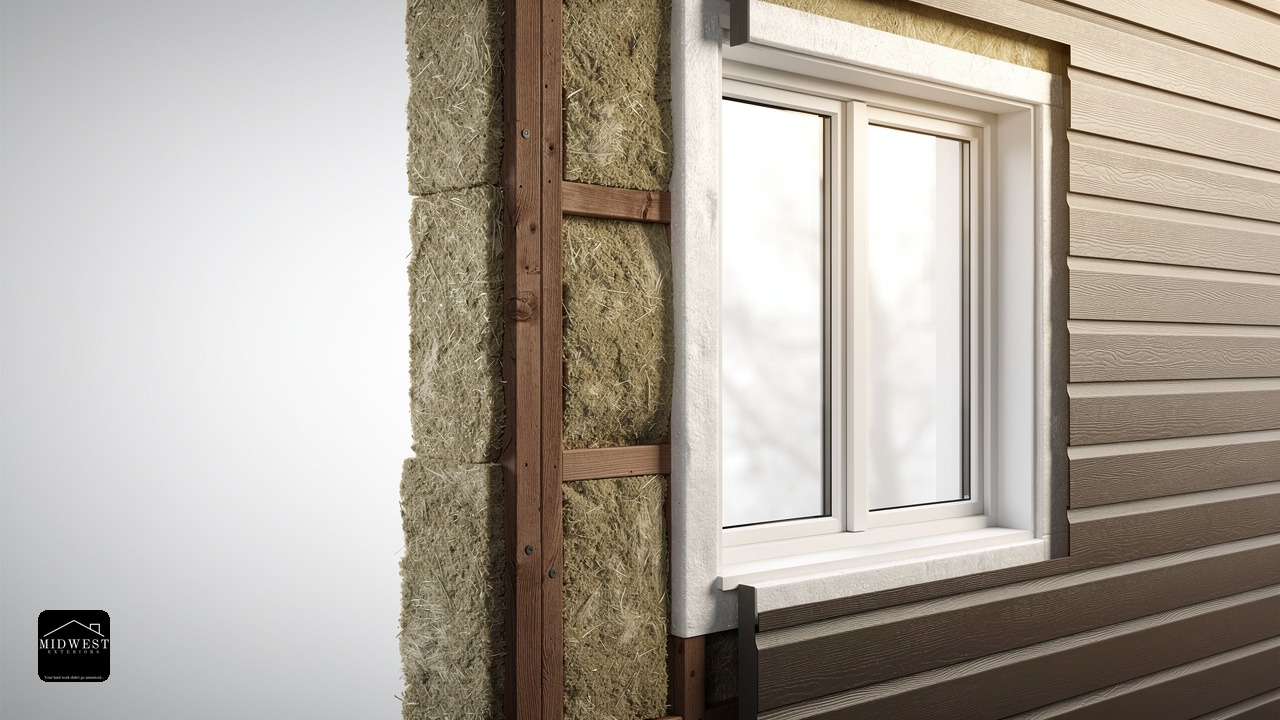
For a homeowner replacing windows, siding, or doors, ENERGY STAR matters most through the idea of the building envelope, which is the combination of walls, windows, doors, and roof separating your heated living space from outside air. A home that earns full ENERGY STAR certification has to perform at least 10% better than one built only to current code, and on average, certified homes land closer to a 20% improvement, largely because the envelope is treated as one connected system rather than separate parts.
The program calls this a complete thermal enclosure system, meaning windows, doors, siding, insulation, and air sealing all work together instead of one weak point undoing the rest. Air sealing refers to closing the small gaps where outside air leaks in, around window frames, door thresholds, and siding seams, and it's one of the most cost-effective upgrades this kind of program points to.
This is exactly why a window or siding project is not just a cosmetic decision. Consider what happens when any of these fail:
- Old windows with failed seals let conditioned air escape around the frame.
- Warped siding with gaps behind it lets cold air push directly into the wall cavity.
- A door that no longer closes that no longer closes tightly loses heat every time the temperature drops outside.
Each of these creates the same outcome: conditioned air leaking out and cold air pushing in, which forces your furnace to run longer to hold the same indoor temperature. Individual ENERGY STAR ratings on windows and doors give you a consistent way to compare products, but how tightly they get installed into the existing opening often decides how much of that rated performance you actually feel in your heating bill.
Why This Matters More In Northern Michigan Winters

Northern Michigan winters put more demand on a home's envelope than most of the state, which is exactly why ENERGY STAR's envelope-first approach applies here more than in milder climates. When outdoor temperatures sit below freezing for months, a furnace in a drafty house runs almost constantly just to hold steady, and every gap in a window frame or siding seam becomes a place where that heat escapes. Homes around Traverse City, Elk Rapids, and Williamsburg also tend to be older, often with original windows and siding never built with today's efficiency standards in mind.
Not every window style seals the same way, either. Operating windows that compress their seal when closed, such as casement styles that crank shut, generally hold a tighter seal than sliding windows, where the sash simply rests against a track. In a region where wind-driven cold is common, that difference has a real effect on comfort and on how hard your heating system works through January and February.
How Midwest Exteriors Helps You Make Energy-Smart Exterior Choices
Midwest Exteriors helps Northern Michigan homeowners apply these efficiency ideas to an actual window, siding, or door project rather than leaving them as abstract program concepts. As an authorized Sunrise dealer, we offer nine window styles, including casement windows, which we point customers toward when seal performance against wind-driven cold is a priority, alongside the double-hung style most local homes already have and bay or bow options for added floor space.
Because we're an authorized dealer rather than a reseller, the product, the warranty, and the service call all run through one company instead of being split between a retailer and a manufacturer you'd have to track down later. Every project starts with a free in-home estimate, where an estimator measures each opening by hand, confirms the glass package and product line that fits your home, and checks for anything that affects the plan, like deck rails or walkways that limit clearance for a casement window's swing.
That step matters because an order built from a phone estimate risks arriving the wrong size, while a hand-measured order matches the opening it's going into. On the siding side, we also offer Alside ASCEND composite cladding, built to hold up through Michigan winters without the scraping, repainting, and rot that wood siding eventually demands in shaded, snow-heavy spots.
What To Expect During A Window, Siding, Or Door Project
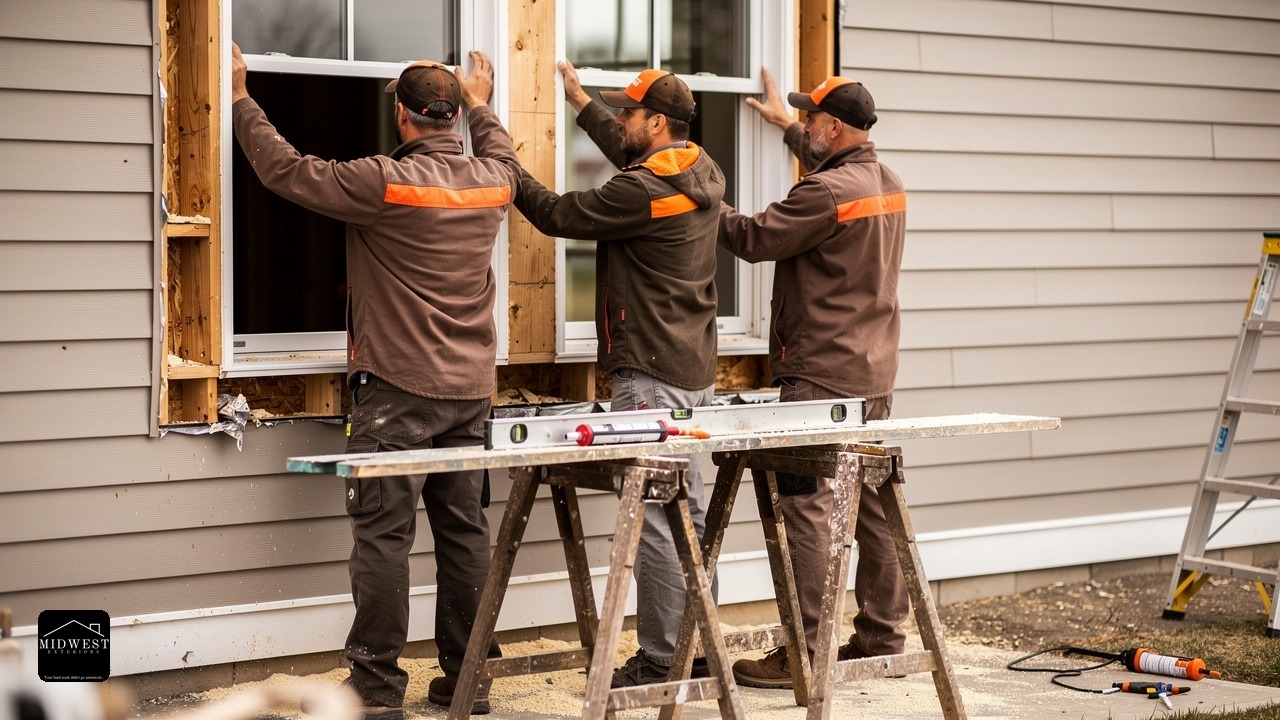
Once you approve a quote, our own employed crew handles the installation start to finish, since we don't use subcontractors on any job. The estimator who measured your home briefs that crew before they arrive, so the people doing the work already know the product and anything unusual about your openings. Most window jobs finish in a single day, and any opening we open during the process gets closed again before the crew leaves, so your home isn't left exposed overnight.
Larger projects, like a full re-side or a bay window installation, take longer, and your estimator walks you through that timeline upfront rather than leaving you guessing. We also call to confirm a real installation date before your order goes to the factory, so you know when crews will show up instead of waiting on a vague follow-up call.
Final Thoughts
ENERGY STAR sets a national baseline for what counts as efficient, but the place you actually feel that efficiency, or the lack of it, is your home's envelope, meaning the windows, siding, and doors standing between you and a Northern Michigan winter. Understanding how the label works helps you compare products with more confidence, but the certification on a spec sheet only goes as far as the installation behind it.
That's where a measurement-first process and a crew that shows up on the date you were promised make the real difference in how your project turns out. If you're weighing a window, siding, or door replacement, I'd start with a free in-home estimate from Midwest Exteriors so you can see which efficient options make sense for your specific home, rather than guessing from a brochure.
Frequently Asked Questions
Is ENERGY STAR Certification Required For New Windows Or Siding?
No, ENERGY STAR certification is voluntary rather than a legal requirement for windows or siding. Many manufacturers choose to meet its specifications anyway because the label gives buyers a trusted efficiency benchmark, but a product can legally be sold and installed without it.
Does Midwest Exteriors Install Energy Star Certified Windows?
We're an authorized Sunrise dealer, and specific certification details and efficiency ratings vary by product line and glass package. For the exact ratings on a window, siding, or door product for your home, call our local office at (231) 620-5061 and we'll walk through the options directly.
Can I Get A Tax Credit Or Rebate For New Windows, Siding, Or Doors?
Possibly, depending on the product and the current year's rules. ENERGY STAR's Rebate Finder tool helps locate local rebates on qualifying products, and federal tax credits sometimes apply to efficient upgrades. Since these programs change yearly, check the current details on the ENERGY STAR website before assuming a credit applies.
How Do I Know If My Current Windows Are Losing Energy?
Common signs include visible fogging between the glass panes, noticeable drafts near the frame, and sashes that stick or no longer latch tightly. If you're seeing any of these, our foggy-window diagnostic tool is a quick starting point before scheduling a full in-home estimate.
Why Do Some Efficient Products Cost More Upfront?
Higher-performing materials, better seals, and multi-pane glass packages generally cost more to manufacture than basic versions, which shows up in the upfront price. That added cost typically pays back over time through lower heating and cooling bills, especially across a long winter heating season.
Does Energy Star Cover Siding Materials Specifically?
Not directly. ENERGY STAR's specifications focus mainly on products like windows, HVAC equipment, and whole-home ratings rather than certifying siding materials on their own. That said, siding still affects your home's overall thermal enclosure, so its condition and installation quality factor into total energy performance.